

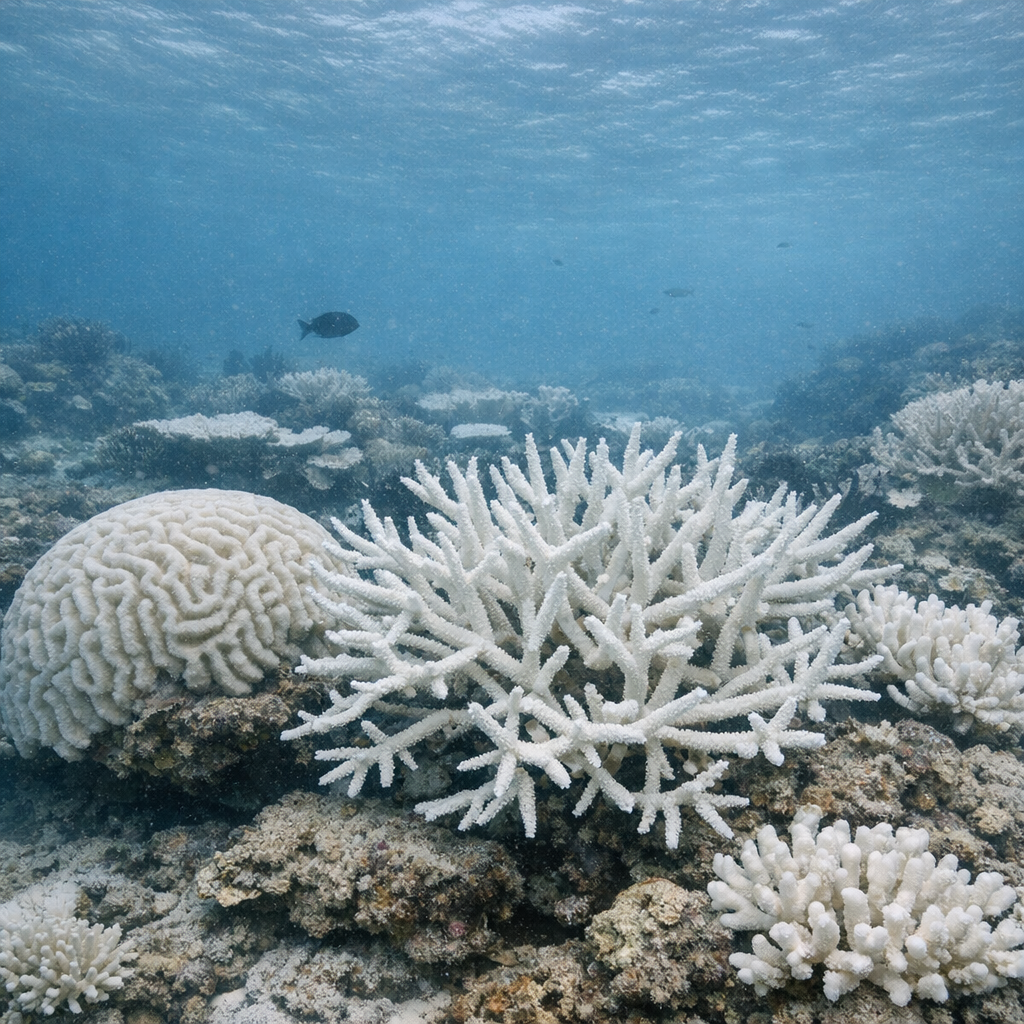
Coral reefs, often referred to as the “rainforests of the sea,” are experiencing an unprecedented global bleaching event. Since 2023, elevated ocean temperatures have led to widespread coral bleaching, impacting approximately 84% of the world’s coral reef ecosystems. This marks the fourth global bleaching event, surpassing the previous one from 2014 to 2017, which affected about two-thirds of global reefs.
In Florida, the situation is particularly dire. The National Oceanic and Atmospheric Administration (NOAA) confirmed that the state’s coral reefs have suffered significant bleaching, with some areas experiencing complete die-offs. Water temperatures in certain regions have soared to 101°F, exacerbating the stress on these delicate ecosystems.
Local organizations are actively responding to this crisis. The Coral Restoration Foundation, for instance, has been at the forefront of efforts to rehabilitate Florida’s coral reefs. They have been monitoring environmental indicators and preparing for various scenarios to mitigate the impact of the bleaching event.
Community involvement is also crucial. Events like Coralpalooza™, organized by the Coral Restoration Foundation, mobilize ocean enthusiasts in Florida and globally to participate in reef restoration activities. These initiatives not only raise awareness but also contribute directly to the rehabilitation of coral ecosystems.
Understanding the gravity of this global event and supporting local restoration efforts are essential steps toward preserving the biodiversity and economic benefits that coral reefs provide. As residents of Coral Springs, staying informed and participating in local initiatives can make a significant difference in combating this environmental challenge.