

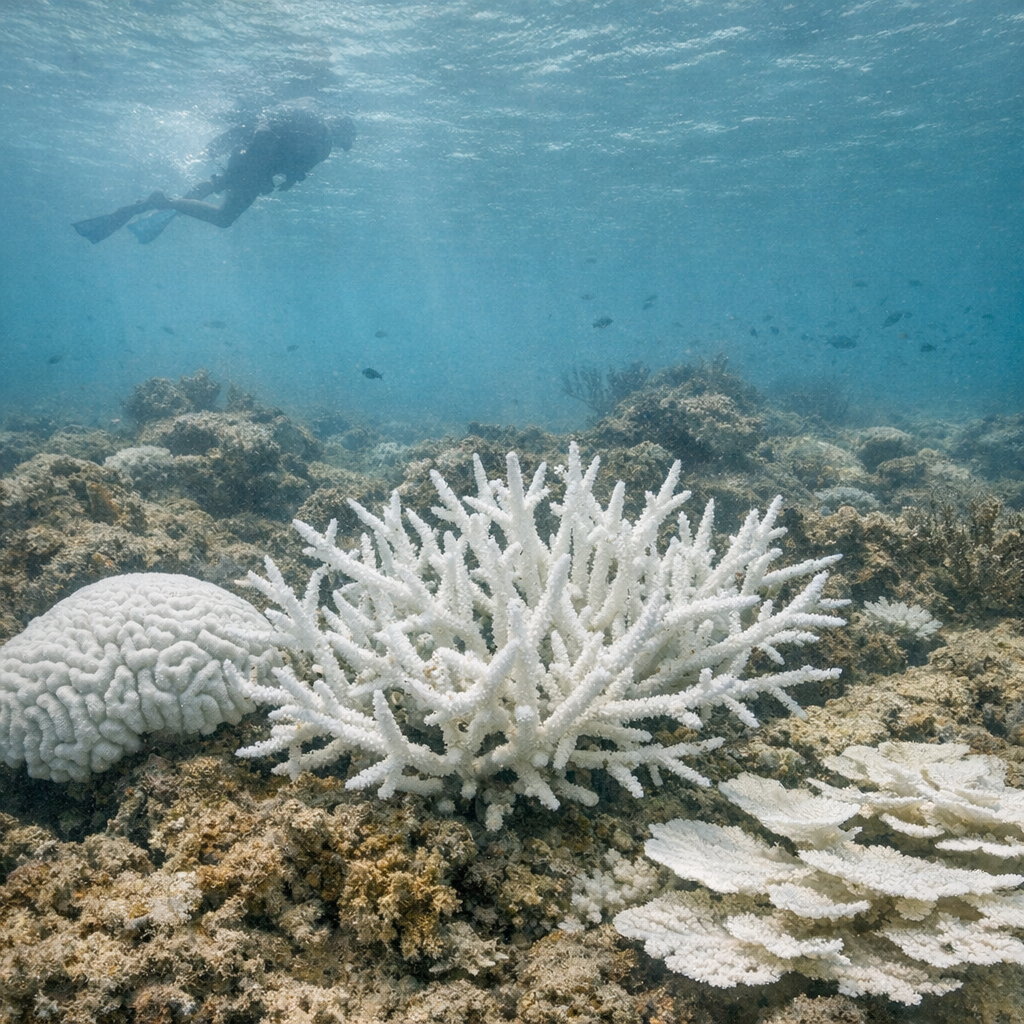
Coral reefs, often referred to as the “rainforests of the sea,” are vital to marine biodiversity and coastal protection. However, these ecosystems are facing unprecedented challenges due to global coral bleaching events.
Understanding Coral Bleaching
Coral bleaching occurs when corals, stressed by elevated sea temperatures, expel the symbiotic algae (zooxanthellae) that provide them with energy and color. This phenomenon leaves corals white and, if prolonged, can lead to their mortality.
The Fourth Global Coral Bleaching Event
Since early 2023, the world has been experiencing its fourth global coral bleaching event, as confirmed by NOAA in April 2024. This event has affected coral reefs across the Atlantic, Pacific, and Indian Oceans, including significant impacts in Florida. Elevated ocean temperatures have led to widespread bleaching, threatening the health of these critical ecosystems.
Local Impacts in Florida
Florida’s coral reefs have not been spared. The Florida Keys, for instance, have experienced extensive bleaching, with some areas reporting complete die-offs. The severity of this event underscores the vulnerability of local marine habitats to global climate phenomena.
Conservation Efforts in Florida
In response to these challenges, local institutions have intensified conservation efforts. The Florida Aquarium, in partnership with the International Union for Conservation of Nature (IUCN) Species Survival Commission, established the world’s first Center for Species Survival focused on coral conservation. This center aims to accelerate coral conservation through global collaboration, assessment, planning, and action.
Additionally, NOAA’s Coral Reef Watch continues to monitor sea surface temperatures and provide critical data to guide conservation strategies. These efforts are crucial in mitigating the impacts of bleaching and promoting the resilience of coral ecosystems.
Community Involvement
Local communities play a vital role in coral conservation. Public awareness campaigns, citizen science projects, and community-led restoration initiatives are essential in supporting the health of coral reefs. Residents can participate in local programs, reduce pollution, and advocate for policies that address climate change.
Looking Ahead
The global coral bleaching crisis highlights the interconnectedness of global events and local environments. While the challenges are significant, concerted efforts at both global and local levels offer hope for the preservation of these vital ecosystems. Continued research, conservation initiatives, and community engagement are key to ensuring the survival of coral reefs for future generations.