

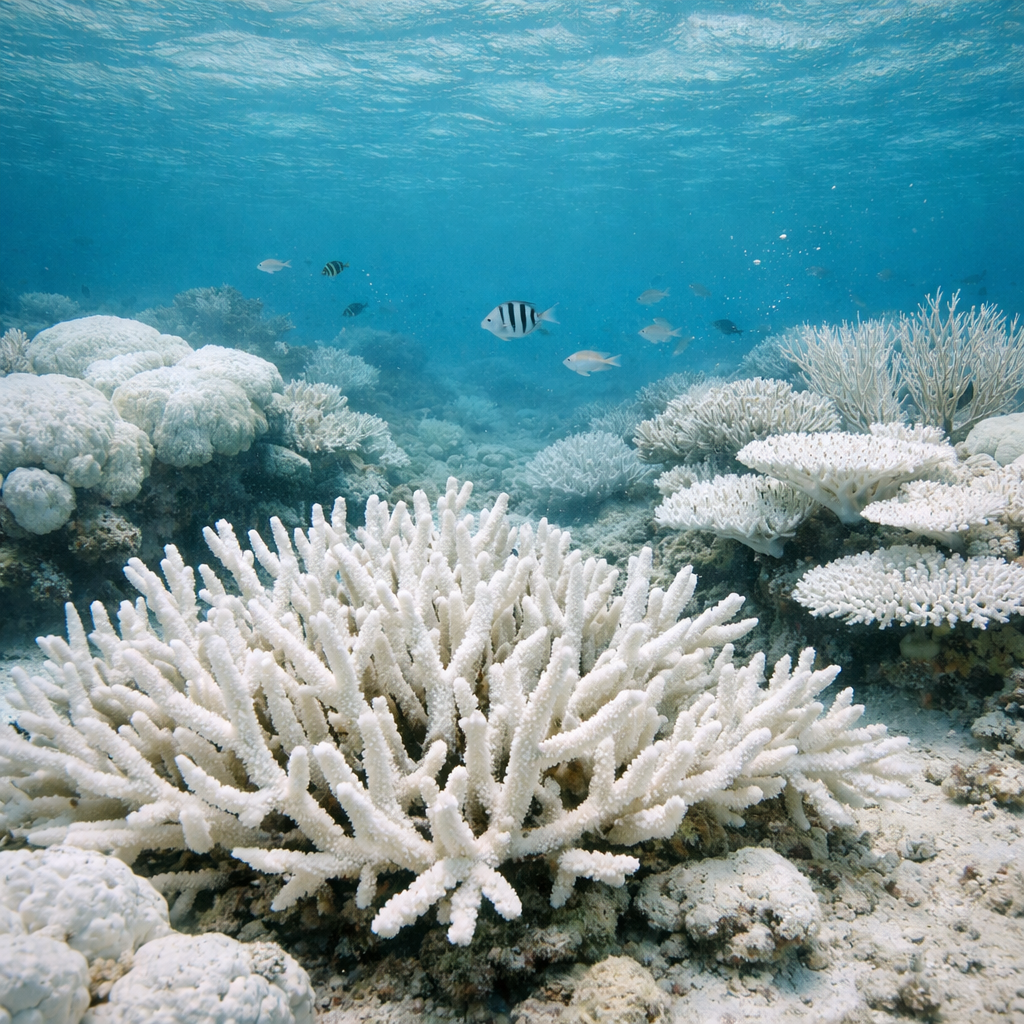
Coral reefs, often referred to as the “rainforests of the sea,” are vital to marine biodiversity and coastal protection. However, the ongoing global coral bleaching event, recognized as the fourth of its kind, has had devastating effects on these ecosystems worldwide, including those off the coast of Florida.
Understanding Coral Bleaching
Coral bleaching occurs when corals, stressed by elevated sea temperatures, expel the symbiotic algae (zooxanthellae) that provide them with energy and color. This not only leads to the whitening of corals but also compromises their health, making them more susceptible to disease and mortality.
Impact on Florida’s Coral Reefs
Florida’s coral reefs have experienced unprecedented levels of heat stress. Reports indicate that sea surface temperatures in the region have reached record highs, leading to widespread bleaching and significant coral mortality. The Florida Keys, in particular, have been severely affected, with some areas reporting up to 100% coral mortality.
Local Initiatives and Community Response
In response to this crisis, various local initiatives have been launched to mitigate the damage and promote reef restoration. The City of Coral Springs has been proactive in addressing climate-related challenges. For instance, in October 2025, the city hosted a virtual town hall focusing on climate dialogue in preparation for the 30th United Nations Climate Change Conference. This event featured discussions on resilience and sustainability strategies pertinent to the local community.
Additionally, organizations like the South Atlantic Fishery Management Council have conducted seminars highlighting the impact of the global coral bleaching event on Florida’s Acropora species, emphasizing the need for conservation efforts.
How Residents Can Help
Community involvement is crucial in combating the effects of coral bleaching. Residents can contribute by:
- Participating in local conservation programs and workshops.
- Supporting policies aimed at reducing carbon emissions and promoting sustainable practices.
- Educating themselves and others about the importance of coral reefs and the threats they face.
By staying informed and engaged, the Coral Springs community can play a significant role in protecting Florida’s precious coral reef ecosystems.